The naming rights industry is robust, mature, and well established. Yet despite decades of deal-making across sports, entertainment, and civic infrastructure, very few organizations have truly cracked the code on why a brand and a property come together to create a lasting naming rights relationship.
When done correctly, a naming rights deal can become one of the most powerful marketing, business development, and enterprise growth tools available to a brand. When done poorly, it becomes an expensive signage agreement rooted almost entirely in media value and exposure metrics. The difference is not awareness. It is perspective.
Most naming rights deals under perform because they are evaluated as marketing sponsorships rather than what they truly are: a brand acquiring a long-term business platform.
Naming Rights as a Business Acquisition, Not a Marketing Buy
A naming rights deal should be evaluated the same way a company evaluates acquiring another business. The question is not how many impressions will this generate, but what does this platform allow the business to become.
At its highest level, naming rights represent a brand embedding itself into a physical, emotional, and cultural ecosystem. That ecosystem should create value far beyond media exposure and must be capable of driving both B2B and B2C growth.
When viewed through this lens, naming rights become a vehicle to expand business development and sales pipelines, open doors to enterprise and institutional decision-makers, create a marketplace showroom for products, technology, and innovation, and serve as a center for customer engagement and relationship-building.
Beyond Marketing: Where Real Value Is Created
The strongest naming rights deals extend across multiple dimensions of the enterprise.
They function as B2B and B2C growth engines, enabling brands to host clients, showcase capabilities, and create deal-making environments within the venue itself. They become business centers, not billboards.
They operate as community and corporate citizenship platforms, allowing brands to align authentically with local priorities, civic initiatives, and social impact efforts. This community integration strengthens trust and legitimacy, particularly for brands operating in regulated or high-scrutiny industries.
They act as employee engagement and recruitment hubs, transforming the venue into a living extension of the company’s culture. Naming rights platforms can support hiring, retention, internal pride, and leadership development.
They provide leverage with government affairs and public sector stakeholders, creating access, visibility, and influence that cannot be replicated through traditional marketing channels.
They serve as global showrooms for innovation, offering a real-world environment to demonstrate technology, sustainability initiatives, research and development capabilities, and future-facing solutions at scale.
Shared Philosophy Is the Real Fit
Asset fit and audience alignment matter, but they are not what ultimately determines whether a naming rights deal endures. The most successful agreements are rooted in a shared philosophy between the brand and the property.
This alignment goes beyond demographics. It asks deeper questions about shared values, long-term vision, and whether the venue authentically represents what the brand wants to stand for in the marketplace.
Just as in a business acquisition, cultural and philosophical alignment often matters more than surface-level synergies.
Structure, Valuation, and Future-Proofing Matter
Once naming rights are viewed as long-term business platforms, valuation and deal structure take on heightened importance. These agreements must be defensible on day one and resilient over decades.
This requires moving beyond media equivalency toward disciplined market valuation, thoughtful rights governance, category protection, and flexibility to adapt to future change. The strongest naming rights deals anticipate shifts in technology, media, regulation, and brand strategy rather than reacting to them.
The Common Thread in Enduring Naming Rights Deals
Across industries, the naming rights agreements that deliver lasting value share a common foundation. They are treated as business investments. They are designed to support enterprise objectives. They are structured with foresight. And they are rooted in shared philosophy between brand and property.
When those elements come together, naming rights become more than a name on a building. They become a strategic engine for growth, influence, and long-term value creation.
Sponsorships can deliver significant value for brands and properties, but ROI is not created by the deal itself. The true return on a sponsorship investment is realized through strategy, disciplined implementation, and thoughtful activation designed to connect brand objectives to audience engagement and measurable business outcomes.
Effective sponsorship programs go far beyond logo placement or static signage. They require a structured approach that integrates experience design, media, data, and ongoing optimization. When executed properly, sponsorships become scalable business platforms rather than isolated marketing tactics.
Aligning Sponsorship Strategy With Business Objectives
The foundation of any successful sponsorship program is clear alignment with business objectives. Before implementation or activation begins, brands and properties must define what success looks like. Objectives may include increasing brand awareness, driving customer acquisition, supporting product launches, building community engagement, or strengthening B2B relationships.
At Innovative Partnerships Group, sponsorship strategy begins with objective-setting and valuation discipline. Sponsorship assets are evaluated based on their ability to support business outcomes, not simply visibility. This ensures strategy, implementation, and activation remain aligned from the outset.
Strategic Implementation: Designing the Sponsorship Platform
Effective sponsorship implementation requires translating strategy into a scalable platform. This includes structuring rights, assets, and activation opportunities in a way that supports flexibility, measurement, and long-term optimization.
High-performing sponsorship implementations typically integrate:
IPG works with brands and properties to design sponsorship platforms where assets, activation, and media function as a connected system rather than isolated components.
Activation Across Multiple Channels
Sponsorship activation is most effective when deployed across multiple channels. Relying on a single touch point limits both reach and impact. Multi-channel activation reinforces brand messaging and creates multiple opportunities for audience interaction.
Activation strategies should be designed to meet audiences where they are—on-site, online, and through ongoing content engagement. Integrated activation increases frequency, relevance, and recall while improving measurement accuracy.
Digital and Social Media Integration
Digital and social platforms are essential to modern sponsorship activation. They extend reach beyond physical attendance and enable real-time engagement and performance tracking.
Effective digital sponsorship strategies include branded content, audience participation, user-generated content, and social amplification tied directly to on-site experiences. At Innovative Partnerships Group, digital activation is planned as a core component of the sponsorship platform, not an afterthought.
Experiential Activation and Audience Engagement
Experiential activation creates emotional connection and deeper brand engagement. Interactive installations, product demonstrations, hospitality environments, and immersive brand moments allow audiences to engage meaningfully with sponsors.
The most effective experiential activations are purpose-driven, integrated with digital extensions, and designed to support measurable objectives. Innovative Partnerships Group ensures experiential elements are aligned with broader sponsorship goals and supported by data capture and performance metrics.
Measuring ROI Through a Disciplined Framework
Maximizing ROI requires moving beyond impressions alone. Innovative Partnerships Group applies a three-level measurement framework:
This approach provides clarity into what is being delivered, how audiences are responding, and how sponsorship investments are contributing to business outcomes.
Creating Long-Term Value
The strongest sponsorship returns are achieved through consistent execution over time. Ongoing strategy refinement, implementation optimization, and activation evolution allow sponsorships to generate compounding value.
IPG treats sponsorships as long-term business platforms, continuously optimizing performance and ensuring alignment with evolving brand and market conditions.
A Strategic Approach to Sponsorship ROI
Successful sponsorship ROI is driven by strategy, disciplined implementation, and intelligent activation. When brands and properties align objectives, structure assets effectively, and apply rigorous measurement, sponsorships deliver sustainable business value.
Innovative Partnerships Group helps brands and properties design, implement, activate, and measure sponsorship programs with accountability and long-term impact.
Learn the basics of brand representation for Naming Rights
1. What does brand representation mean in sponsorships and naming rights?
Brand representation in sponsorships and naming rights means serving as a trusted advisor and subject-matter expert acting on behalf of a brand. It includes guiding strategy, valuation, program design, negotiations, and long-term optimization so sponsorship and naming rights investments drive real business and brand outcomes.
2. How is brand representation different from traditional sponsorship agencies?
Traditional brand representation is broader and can span many areas of marketing. A sponsorship and naming rights Agency of Record is more specialized, combining marketing and business strategy with deep knowledge of how sponsorship and naming rights deals work and how properties think and sell. This helps brands integrate sponsorships and naming rights into their overall strategy and optimize long-term value and performance.
3. Why do brands need representation in sponsorships and naming rights?
Brands need representation because sponsorships and naming rights are complex, long-term investments, and success depends on understanding how the property side thinks, sells, and structures deals. A brand representative helps build strong relationships with rights holders while optimizing rights and benefits, securing the best deal structure, and ensuring the program is evaluated and measured effectively over time.
4. What services are included in brand representation for sponsorships and naming rights?
Brand representation includes end-to-end support across sponsorship and naming rights strategy, planning, and execution. This typically includes sponsorship strategy and advisory, naming rights planning, sponsorship and naming rights valuations, research and analytics, program design and sponsored program development, and brand equity and revenue impact analysis. It also often includes creative concepting, activation strategy, and measurement and optimization to ensure performance over time.
5. How does a brand representative help brands evaluate sponsorship and naming rights opportunities?
A brand representative evaluates opportunities through strategic fit, disciplined valuation, and deal-structure review. This includes benchmarking against comparable agreements, assessing the rights package and commercial terms, modeling brand and revenue impact, and clarifying activation requirements. The outcome is a defensible view of what the asset is worth, how it compares to alternatives, and how it should be structured to deliver measurable ROI over the full term.
6. How does brand representation impact sponsorship ROI?
Brand representation improves sponsorship ROI by ensuring agreements are structured correctly, rights are fully optimized, and performance is measured beyond media impressions. It emphasizes direct and indirect revenue impact, brand equity creation, and long-term value rather than short-term exposure metrics.
7. How are sponsorships and naming rights valued from a brand perspective?
Sponsorships and naming rights are valued based on brand impact, business objectives, market conditions, competitive context, and integration potential. This helps a brand understand what an asset is worth to them over the full term, not just what it costs.
8. What role does program design play in brand representation?
Program design turns sponsorships into scalable platforms rather than isolated assets. It includes building sponsored programs around community impact, sustainability, human capital, and government affairs to align with broader brand, ESG, and stakeholder priorities.
9. How does brand representation help brands unlock additional value?
Brand representation uncovers underutilized rights, integration opportunities, and structural improvements that increase total value. This can include new programs, deeper operational integration, expanded rights, improved measurement, and stronger activation planning.
10. What types of brands benefit most from sponsorship and naming rights representation?
Brands of all sizes can benefit from sponsorship and naming rights representation, from emerging brands pursuing their first strategic sponsorship to global Fortune 500 companies managing complex, multi-year naming rights investments. Representation adds value at every level by helping brands evaluate opportunities, structure deals, optimize rights and benefits, and measure performance.
11. How does brand representation support negotiations?
Brand representation strengthens negotiations by grounding deal terms in strategy, valuation, and market context rather than subjective pricing. It helps define value, optimize the rights package, structure agreements appropriately, and negotiate from an informed, defensible position.
12. How does brand representation impact long-term brand equity?
Brand representation ensures sponsorships and naming rights reinforce credibility, relevance, and alignment with meaningful platforms. Over time, this strengthens brand equity, improves market perception, and increases the long-term return on sponsorship investment.
Learn the basics of Sponsorship and Naming Rights
1. What is a naming rights deal?
A naming rights deal is a long-term commercial agreement in which a brand secures the right to attach its name to a venue, district, or other high-profile asset. Beyond signage, these deals typically include integrated marketing rights, media exposure, hospitality, and ongoing brand presence. When structured correctly, naming rights function as a strategic platform that delivers sustained visibility, credibility, and business value over time—not just logo placement.
2. How do sponsorships benefit brands?
Sponsorships allow brands to connect with audiences in environments where attention, emotion, and engagement are already high. Unlike traditional advertising, sponsorships create association, credibility, and relevance by aligning a brand with experiences people care about. The strongest programs are designed to drive specific business outcomes—such as awareness, consideration, customer acquisition, or community impact—rather than just impressions.
3. What types of sponsorships are available?
Sponsorships span a wide range of assets, including teams, leagues, events, venues, media platforms, districts, and mixed-use developments. They can be local, regional, or national in scope and may include naming rights, presenting sponsorships, category exclusivity, media integrations, and experiential activations. The right structure depends on a brand’s objectives, audience strategy, and long-term growth goals.
4. How do I determine if a sponsorship is right for my brand?
The right sponsorship aligns with your target audience, brand values, and business objectives—and can be measured against clear performance criteria. This requires understanding not just who the audience is, but how they engage, what the asset represents, and how the partnership can be activated. A strategic evaluation helps ensure the sponsorship supports broader marketing and business priorities rather than operating in isolation.
5. What are the key elements of a successful naming rights deal?
Successful naming rights deals balance financial terms with strategic value. Key elements include brand visibility standards, media and marketing rights, category protections, activation opportunities, contract length, and performance measurement. Just as important is ensuring the deal is structured to evolve over time, allowing the partnership to grow as the venue, audience, and market mature.
6. How can sponsorships enhance brand visibility?
Sponsorships enhance visibility by embedding brands into highly visible, culturally relevant platforms across physical, digital, and media channels. The greatest impact comes from integrated programs that combine signage, media exposure, content, and on-site experiences. Visibility is most effective when it is consistent, contextually relevant, and supported by activation—not just presence.
7. What’s the difference between naming rights and sponsorships?
Naming rights are a premium form of sponsorship that provide exclusive, long-term brand association with an asset’s identity. While sponsorships can include a variety of assets and shorter-term agreements, naming rights typically involve higher investment, longer commitments, and deeper integration into the property’s brand and communications. As a result, they require more rigorous valuation, structuring, and long-term planning.
8. How do you negotiate sponsorship deals?
Effective sponsorship negotiations are grounded in a clear understanding of value—on both sides of the table. This includes evaluating audience reach, brand alignment, market conditions, and comparable deals. The goal is not simply to reduce cost, but to structure agreements that maximize rights, flexibility, and long-term return. Strong negotiations result in partnerships that are fair, sustainable, and performance-driven.
9. How do I know if my venue is ready for a naming rights deal?
A venue is ready for naming rights when it has a defined brand identity, measurable audience reach, and long-term relevance. Market demand, category interest, and competitive context also matter. A formal valuation helps determine realistic pricing, optimal deal structure, and the types of brands most likely to see strategic value in the partnership.
10. How can naming rights generate long-term revenue?
Naming rights provide predictable, long-term revenue that supports operations, development, and growth. Beyond the base fee, well-structured deals can unlock additional value through extensions, activation spend, and expanded partnership rights. As the property’s profile grows, naming rights can also increase in strategic importance and market value over time.
11. What industries benefit most from sponsorships and naming rights?
Industries that value visibility, credibility, and long-term brand association—such as sports, entertainment, real estate, financial services, healthcare, technology, and education—often see strong returns from sponsorships and naming rights. The key is not the industry itself, but how well the partnership aligns with the brand’s audience, positioning, and growth strategy.
12. How do sponsorships impact the overall success of an event or venue?
Sponsorships provide critical financial support while enhancing the overall experience for fans, guests, and stakeholders. Strong partnerships can elevate marketing reach, improve amenities, and fund innovation. When aligned strategically, sponsorships contribute not just revenue, but long-term brand strength and market relevance for the event or venue.
Innovative Partnerships Group’s team of consultants, data analysts, and marketing scientists have been on the cutting edge of partnership valuation for brands and monitors the trends in the sponsorship industry. We have performed dozens of naming rights and sponsorship valuations, and over the past 12-18 months we have had many clients, industry leaders and decision makers note there was a massive void in the market on data and trends related to hospitals/health systems and sponsorship.
This inaugural “Sponsorship and Naming Rights Study” is the first time that a company has taken an in-depth look at sponsorship, naming rights trends and best practices to help health systems maximize their sponsorship investments and understand critical best practices when negotiating and executing partnerships. The results provide benchmarking research and actionable insights to decision makers who support and influence future partnership marketing activities.
As health systems make investments to drive profitable growth strategies and provide more patients with access to quality care -- amidst higher costs and mergers -- healthcare organizations are still projected to spend more than $12 billion in 2024 on local advertising (according to a report). And despite a downturn because of Covid, health spending increased by 4.1% in 2022 and looks to continue to rise in the years ahead.
While sponsorships are not new to many health systems, committing substantial portions of marketing budgets may be more challenging in today’s climate. But with significant mergers comes the need to raise brand awareness, especially as hospitals and health systems move toward a regional approach. As our study demonstrates, while all 30 participants activate in sports, there are many categories inside and outside of professional/collegiate sports that are still ripe for partnership. Youth and amateur sports, school districts, mixed-use districts, zoos, film festivals, etc. are all underutilized properties and are typically available to health system partners as a viable way to reach – and increase – patient affinity for their brand.
PARTICIPANTS
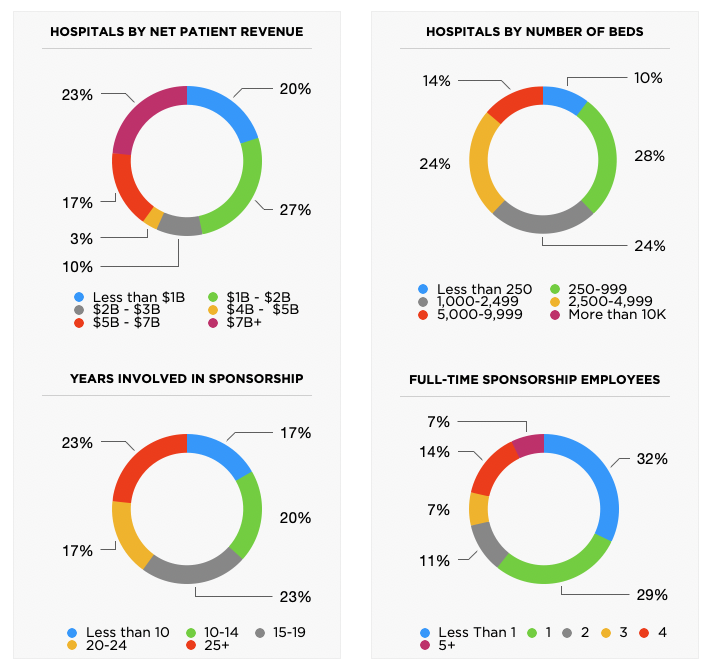
This study was conducted from Feb-April, 2024. Thirty hospitals and health systems provided in-depth responses about their sponsorships and naming rights partnerships. Participants represent a diverse group of hospitals both geographically and economically. Participating hospitals had net patient revenue ranging from under $1 billion to more than $10 billion (with a median asset size of $1.75 billion). Of those surveyed 90% had more than 1,000 beds. Most hospitals have vast experience in the sponsorship industry, with more than 80% indicating 10+ years of experience.
KEY FINDINGS
The results of the inaugural study uncovered meaningful results that had not been typically captured for this important industry. It is clear that the rise in naming rights and high value assets for hospitals and health systems is one of the fasting growing sponsorship categories in the United States. It is even more evident that participants are continuing to look for metrics and qualitative/quantitative results to help them maximize their significant investments in sponsorship and naming rights as a percentage of their media/marketing mix.
MARKETING
Overall, typical marketing budgets ranged up to $60-80 million annually. The majority of hospitals allocate 0-25% of marketing budgets to sponsorships, yet more than two-thirds consider sponsorships to be a “very” important part of the overall marketing mix. This indicates strong profitability from hospitals and health systems with the wherewithal to allocate a smaller percentage of marketing dollars toward sponsorship, while still spending a “healthy” amount.
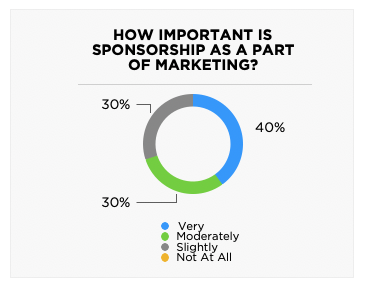
The top 13 largest hospitals surveyed (those with more than $4B in annual net patient revenue) tend to spend less on sponsorships as part of its marketing mix. And less than 40% (5 of 13) indicated that sponsorship was a “very important” part of their marketing mix. This is probably more indicative of large hospital marketing budgets and allocations toward various expenditures versus overall attitudes toward sponsorship as a whole. However, there are still impactful deals that smaller hospitals and health systems could engage in, especially in smaller communities, to mirror expenditure budget models of their larger counterparts by partnering with smaller universities, municipalities, arts and music, etc.
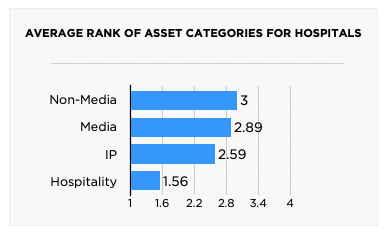
When asked about views on sponsorship asset categories, non-media and media assets were ranked highest among respondents. Hospitality consistently ranked last or next to last with all but a few hospitals. Intellectual property was a polarizing category, as about 1/3 ranked it last while 1/3 ranked it first. As one hospital executive stated, “the overall designation and relationship trumps everything.” The difference in opinions on asset categories reflects the importance of tailoring partnership deals to satisfy different marketing objectives among those in this industry.
Among individual asset categories, direct healthcare services ranked the highest while exclusivity ranked next. Media assets, especially social media, PR and TV-visible signage, were also considered to provide very effective value.
It is not surprising that most health systems do not put a high emphasis on business development, or hospitality and VIP experiences. It is surprising, however, to see the lack of importance given to employees. This would seem to be an area to increase programming given the turnover rates and retention difficulties in health care post-COVID.
SPONSORSHIP
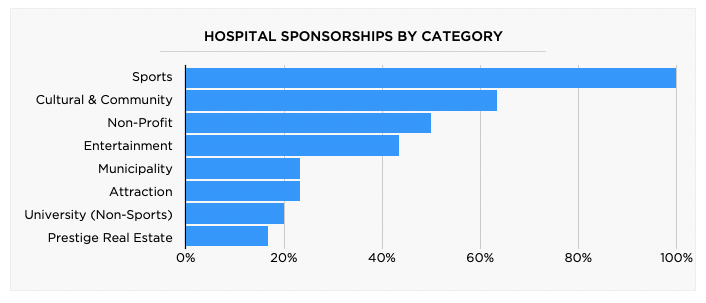
The study asked about the types of sponsorships in which hospitals engage. Sports is the dominant category with 100% of participants surveyed having at least one partnership, followed by Cultural & Community, Non-Profit and Entertainment. At least one in six (1 in 6) participants had one or more sponsorships within Municipality, Attraction, University (Non-Sports) and Prestige Real Estate indicating a wide variety of property opportunities. Within each of these categories, we asked for a breakdown of category-specific subtypes. Festivals (non-music) was the most-popular non-sports rights holder.
Evaluation Methods & Tracking
Given that brand awareness was the top reason to engage in a sponsorship, it made sense that KPIs tracking brand awareness were the most important to those surveyed. Community give-back/involvement scored the next highest on average (3.73).
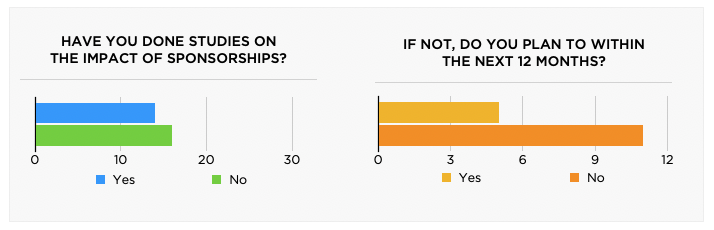
Evaluating sponsorship effectiveness can be difficult, especially when engaging in only a few deals with vastly different partners. Metrics can be difficult to quantify and even more challenging to measure, especially on an ongoing basis. About half of those surveyed have a formal process for evaluating sponsorships. Interestingly, of those hospitals who do not have a formal process, seven are engaged in naming rights or high value assets where the spends are typically higher and ROI may be even more valuable to track.
As marketing budgets expand and there is greater scrutiny of spending as related to marketing objectives, the evaluation approaches should increase.
Patients & Employees
Patient care is the backbone of any healthcare institution, especially when hospitals are not only competing for patients in their own backyards (markets), but are looking to attract from across their region, the nation and beyond. And with recent mergers, it is essential that trust is established with these new health system brands.
The results show that health systems have a lower awareness than what is deemed to be reasonably acceptable in sponsorship measurement. There is an opportunity to strengthen sponsorship activation and measurement programs to more adequately measure the unaided brand awareness of sponsorship, which is one of the most critical elements.
Another key stakeholder group is the health system employee.The majority of those surveyed indicated that employees are not aware of partnerships (less than 50%) or are unsure of the awareness levels. Many of the sponsorship deals are focused and aligned with marketing goals, while employee benefits are a secondary consideration. This may be an underutilized area of partnership activation.
Activations are an additional cost for partnerships that must be considered to maximize value. More than 75% of hospitals dedicate 25% or less of a sponsorship fee to activation.
NAMING RIGHTS
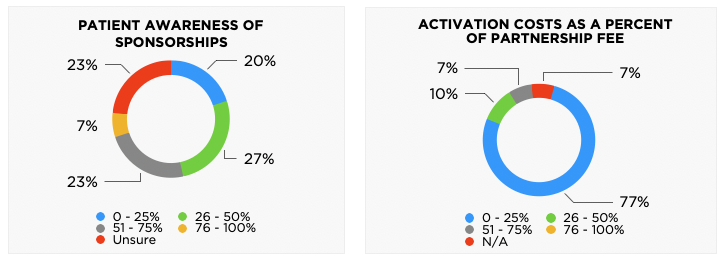
Two-thirds of those surveyed (20) have at least one naming rights partnership or entitlement to a high value asset, such as a training center, venue or jersey patch. Of those that do not have a naming rights partnership, only one (1) indicated that they are expected to pursue a naming rights opportunity within the next 12 months.
BEST PRACTICES
Looking forward, healthcare marketing executives are constantly looking for new ways to engage consumers, especially in the communities for which they serve. Media is a fragmented industry, but it’s possible to leverage different media channels combined with on-site activations and permanent signage opportunities to provide robust partnership branding. In addition, rights holders in emerging markets or with access to unique demographics that align with hospitals should seek ways to partner. Lastly, although the responsibility to measure a partnership could fall on both parties, hospitals desire better metrics that can be delivered more frequently to measure effectiveness.
To register for the 2025 Healthcare Sponsorship Study, or to request a copy of the full Executive Summary, please email Jeff Dimond at jdimond@ipg360.com.
*Innovative Partnerships Group served as the third-party administrator of the survey and held participants’ data in the strictest confidence. The questions in this survey were reviewed by a Steering Committee made up of executives from a select group of credit unions in order to ensure accuracy, relevance, and ability to make an impact for those participating.
Innovative Partnerships Group’s team of consultants, data analysts, and marketing scientists have been on the cutting edge of partnership valuation for brands and monitors the trends in the sponsorship industry. We have performed dozens of naming rights and sponsorship valuations, and over the past 12-18 months have had many clients, industry leaders and decision makers note there was a massive void in the market on data and trends related to credit unions and sponsorship.
This inaugural “Sponsorship and Naming Rights Survey” is the first time that a company has taken an in-depth look at sponsorship, naming rights trends and best practices to help credit unions maximize their sponsorship investments and understand critical best practices when negotiating and executing partnerships. The results provide benchmarking research and actionable insights to decision makers who support and influence future partnership marketing activities.
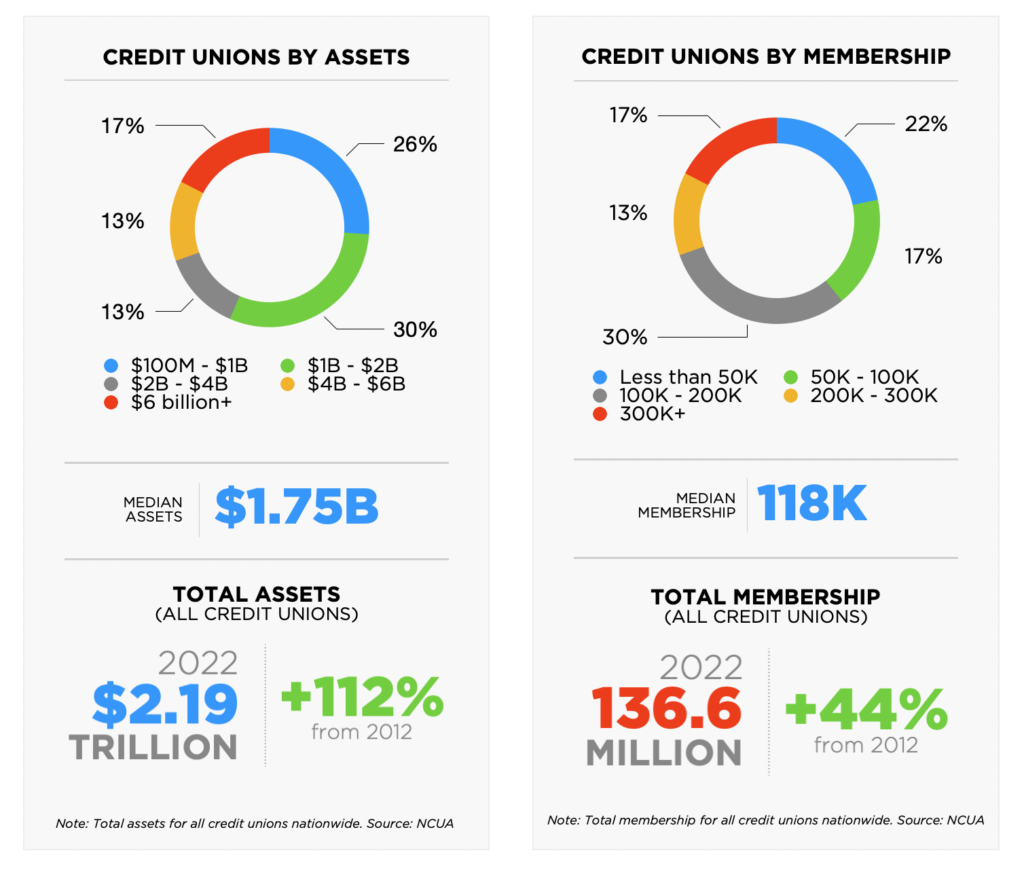
More than 135 million people are now members of credit unions in the United States, up 44% from a decade ago. More telling, however, is credit union assets have more than doubled during that same period to $2.19 trillion. Overall credit union marketing budgets have exceeded asset growth levels, but are still relatively low compared with major financial service companies. And yet credit unions are one of the fastest growing sponsorship and naming rights categories in the industry for sports teams and universities due to expanding partnership efforts.
Committing significant portions of marketing budgets to sponsorships is new for some organizations. All survey participants reported that sponsorships have been added to their marketing programs within the past 20 years. As budgets have increased, credit unions have sought non-traditional forms of media to reach out-of-home audiences while complementing existing social/digital marketing channels. As credit unions become larger and more comprehensive financial institutions, their mass appeal has opened new avenues for marketing and partnerships.
PARTICIPANTS
This survey was conducted from April to July, 2023. Twenty-three (23) credit unions provided in-depth responses about their sponsorships and naming rights partnerships, representing a diverse group of credit unions both geographically (across 15 states in all regions of the country) and economically. Many credit unions, including some in the survey, have been expanding fields of membership and altering charters to drive growth. Notably, six of the credit unions surveyed made a change to their fields of membership within the past year.
KEY FINDINGS
The results of the inaugural study uncovered a demand for sponsorships and naming rights by credit unions. Participants look for metrics and qualitative/quantitative results to help them maximize their significant investments in sponsorship and naming rights as a percentage of their media/marketing mix. Measurement is a challenge to credit unions who typically look at traditional media channels like digital, social, OOH, radio and TV/broadcast for data.
MARKETING
Overall, typical budgets ranged up to $20 million annually. Traditional paid media accounts for less than 50% of marketing expenditures for the vast majority of those surveyed. The majority of credit unions allocate 26-50% of marketing budgets to sponsorships and an even higher percentage consider sponsorships to be a “very” important part of the overall marketing mix. This is because sponsorships offer a mix of traditional paid media advertising along with affinity marketing.
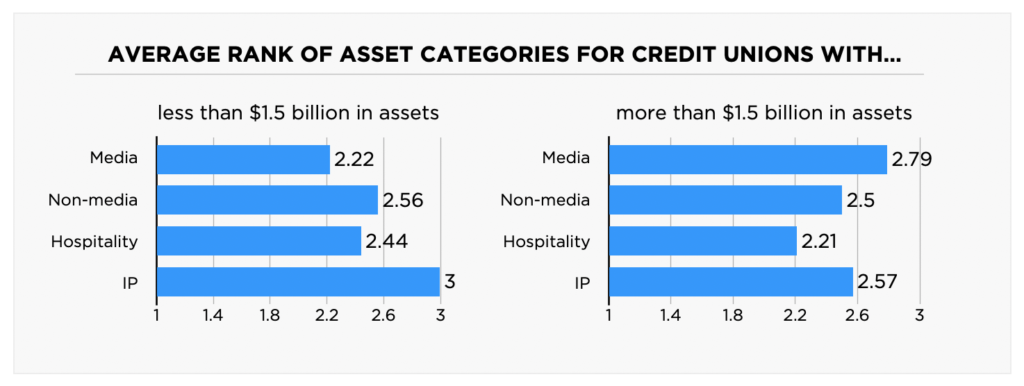
When asked about views on sponsorship asset categories, media assets were ranked highest among respondents with assets greater than $1.5 billion. Intellectual property was the most polarizing category. It was ranked highest and lowest by four credit unions each among the 14 credit unions with $1.5 billion in assets or more. That reflects the importance of tailoring partnerships to satisfy individual marketing objectives.
In contrast, small credit unions (those with less than $1.5 billion in assets) ranked intellectual property rights as the most important and media assets as least important.
Among individual asset categories, exclusivity ranked highest despite two credit unions giving it the lowest score possible. It was nearly universally recognized as the most effective element to drive return on sponsorship dollars. Other powerful assets were social media, promotions, on-site activations and public relations.
SPONSORSHIP
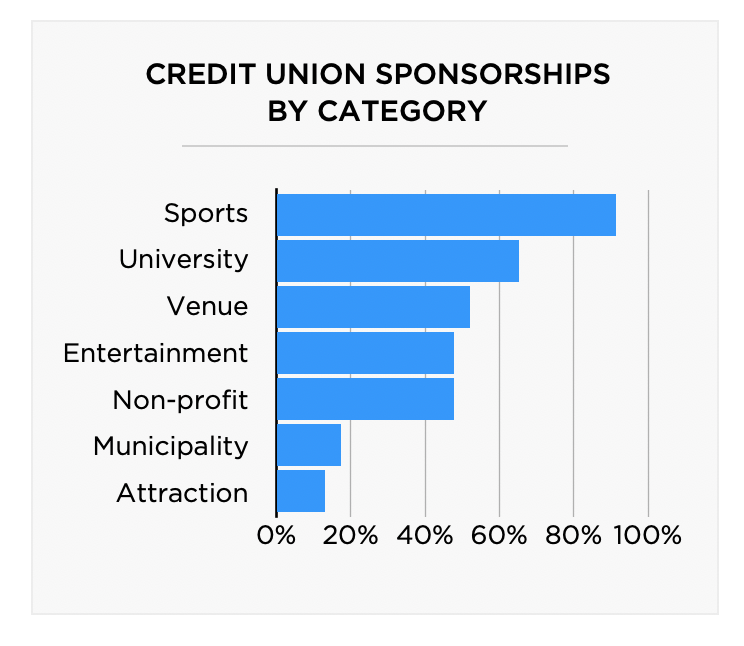
Sports is the dominant category among the types of credit union sponsorships, followed by universities, non-profits and venues. philanthropic efforts and community events.
For sports, collegiate teams are the most frequent partners for credit unions. While athletics represent one of the highest affinity groups with broad appeal, there were significant numbers of deals with student bodies and alumni associations. Alumni associations may be a potential group for credit unions to target within a university as these organizations can offer memberships that align with credit union demographics and offer penetration outside its hometown market.
MEMBERS & EMPLOYEES
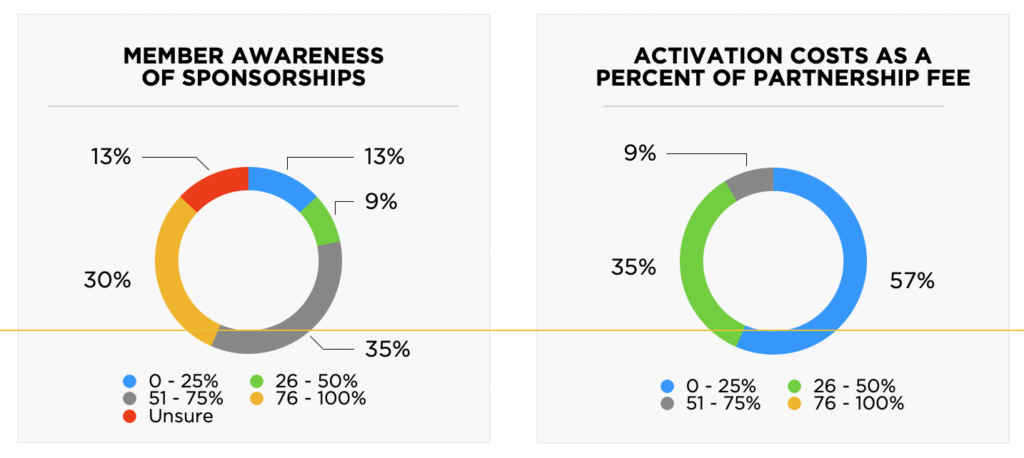
We asked credit unions to assess their members’ and employees’ awareness of their sponsorships. Credit union members need a high level of engagement with their institutions given their local community ties and niche membership groups. Large national banks and other financial institutions may have a more difficult time establishing an authentic connection with consumers.
The results show that credit unions have a lower awareness than what is deemed to be reasonably acceptable in sponsorship measurement. There is an opportunity to strengthen sponsorship activation and measurement programs to more adequately measure the unaided brand awareness of sponsorship which is one of the most critical elements of sponsorship.
Another key stakeholder group is the credit union employees. The majority of those surveyed indicated that employees are aware of partnerships, although the numbers decline slightly when asked if employees are positively impacted. Many of the sponsorship deals are focused and aligned with marketing goals and employee benefits are a secondary consideration. About half of those surveyed leverage partnerships through volunteerism, tickets, etc. This may be an underutilized area of partnership activation, which has been traditionally focused on brand awareness.
Activations are an additional cost for partnerships that must be considered to maximize value. Most credit unions dedicated 50% or less of a sponsorship fee to activation.
NAMING RIGHTS
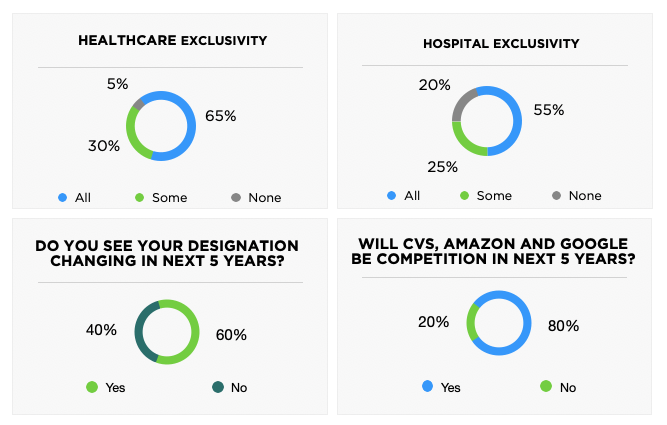
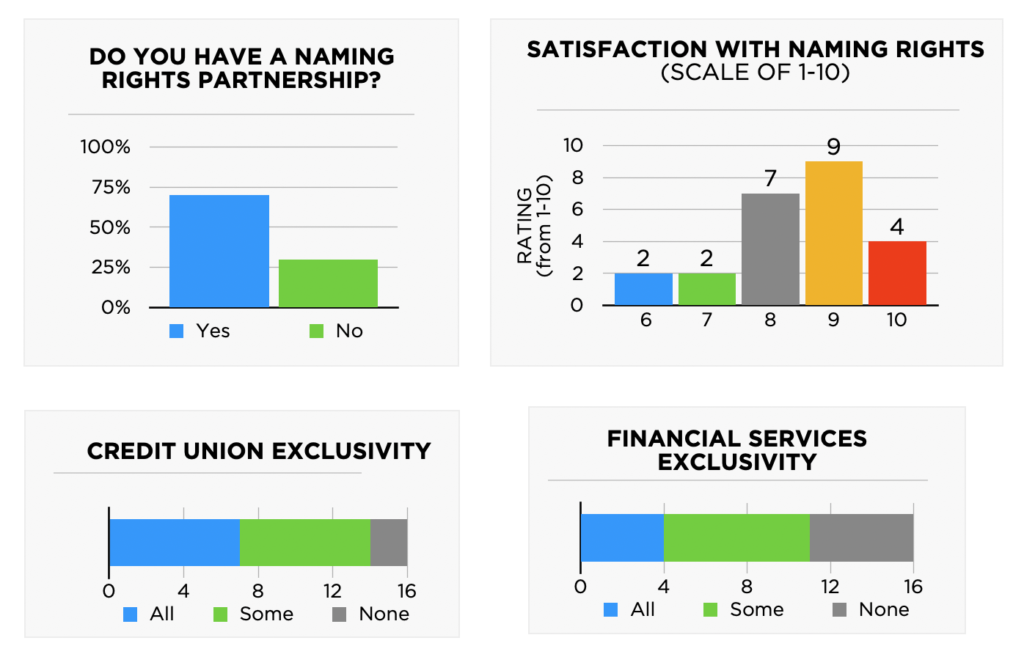
About two-thirds of those surveyed have at least one naming rights partnership. Credit union services are included in rights deals, but credit unions frequently offer more robust financial services. Exclusivity, which is usually a key component of deals for larger categories such as automotive and beverage, is important for credit unions - but only half of those who have naming rights partnerships include category exclusivity in the “credit unions” category for all deals while others include it in some of the time. The numbers decline for the broader banking category and financial services category designations.
BEST PRACTICES
Looking forward, credit union marketing executives are constantly looking for new ways to engage consumers. Media is a fragmented industry, but it’s possible to leverage different media channels combined with on-site activations and digital/mobile banking offerings to provide robust partnership opportunities. In addition, rights holders in emerging markets or with access to unique demographics that align with credit unions should seek ways to partner. Lastly, although the responsibility to measure a partnership could fall on both parties, credit unions desire better metrics that can be delivered more frequently to measure effectiveness.
To register for the 2024 Credit Union Sponsorship Survey, or to request a copy of the full Executive Summary, please email Jeff Dimond at jdimond@ipg360.com.
*Innovative Partnerships Group served as the third-party administrator of the survey and held participants’ data in the strictest confidence. The questions in this survey were reviewed by a Steering Committee made up of executives from a select group of credit unions in order to ensure accuracy, relevance, and ability to make an impact for those participating.
How does a boutique sponsorship agency in LA land FC Barcelona as a major client? Listen to Jeff Marks, Founder and CEO of the Innovative Partnerships Group tell the story, and yes, they are exactly what the name implies! Based in Los Angeles, IPG has brand clients, rights holder clients and is one of the leaders in brand, sponsor, client, rights holder integration. Their best know client? FC Barcelona in Spain. Listen Up!
Listen Here: Jeff Marks is Founder and CEO of the Innovative Partnerships Group.
On this episode of The PlayBook Podcast, Host David Meltzer sits down with two brilliant business minds - Len Komoroski, CEO of the Cleveland Cavaliers, and Jeff Marks, CEO of Innovative Partnerships Group. They chat about the keys to building successful partnerships and give listeners insight on how to create revenue through the emotional aspects of sports.
Listen Here: The Key to Building Successful Partners
Marks and Komoroski also look forward at the future landscape of sports partnerships. They discuss how, as sports business and technology evolve, properties can adjust their approach to building sponsorships and, in turn, better create sustainable revenue streams. They then provide predictions for changes sports marketers can expect in the coming yea
Sports Business Journal presents the nominees for the 15th annual Sports Business Awards, recognizing excellence over the past year. The winners will be determined by a group of more than 40 industry executives. Award recipients will be announced during our live event on Wednesday, May 18, at the New York Marriott Marquis Times Square.
Sports Business Journal has nominated Innovative Partnerships Group for agency of the year in the category: Best in Property Consulting, Sales and Client Services. This is the second nomination for Innovative Partnerships Group who was also nominated in 2020 prior to Covid.
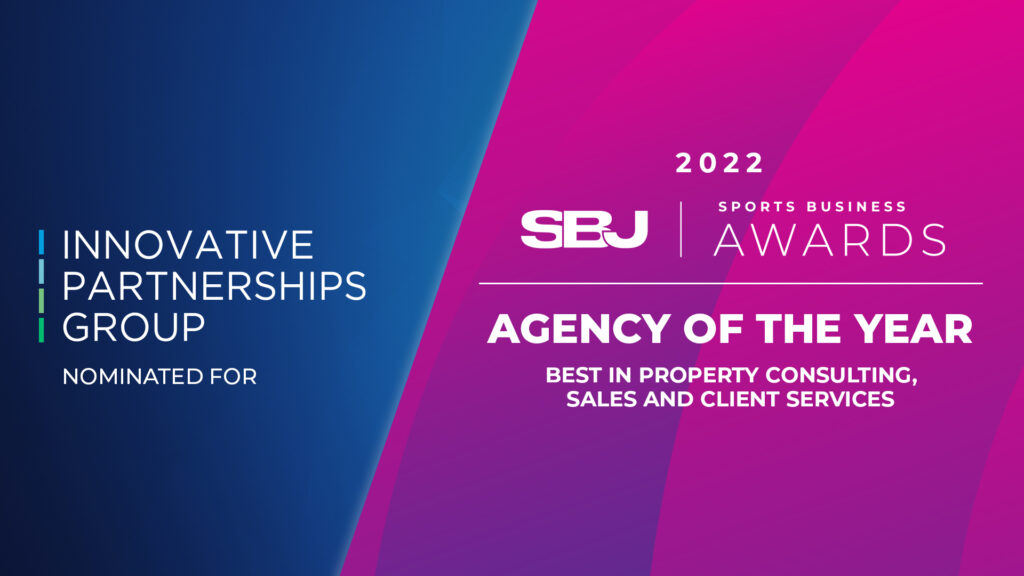
Innovative Partnerships Group had another record-breaking year of business development and consulting for some of the industry’s most meaningful partnerships leveraging its proprietary Partnership Intelligence methodology.
For the full list of nominees, visit the Sports Business Journal.
In addition, Kraft Group Founder, Chair & CEO ROBERT KRAFT will be presented with our Lifetime Achievement Award as well that night.
For more information, please visit Innovative Partnerships Group at ipg360.com or info@ipg360.com
Jeff Marks is a true Sports Entrepreneur, having started several agencies from an early age and now leading a “best in class” COI (Contractual Obligated Income) Agency which is breaking grounds around the world, including a recent huge deal with FC Barcelona to manage the branding of the Nou Camp Stadium and new facilities. Tons of learning and insights into the world of COI.
Listen Here: Episode 25 with Jeff Marks
On Early start during MBA days:
Managing Director of a 2 Man Consulting business with his Professor. Stubhub story, the one that got away.
On Starting Sports Business Ventures:
Venture Capital Pledged Fund dedicated to Sports, partnered with Alan Rosenberg and other big hitters
On Premier Partnerships:
Premier Naming rights agency. Generating massive COI, for large US teams and franchises.
On Premier Ventures:
Advisory agency, another run at Venture Capital
On Innovate Partnership Group (IPG360):
Starting of a new business development group to help sports IP owners generate long term commercial revenue
On the Two words you are not allowed to say at IPG360:
“Sales” and “Sponsorship”
On the Four Main Areas of Focus:
On Proprietary Software:
Partnership intelligence platform (a brand new Valuation System)
Direct and Indirect Revenue measurements
R&D, Technology, other non-traditional areas to measure returns
On Current Projects:
US Triathlon, Circuit of Americas (US F1 Track), MLS teams, Canadian Premier League
On FC Barcelona story:
Goldman & Sachs intro leads to working on re-development of Camp Nou
On Not just Naming rights:
Beyond naming a Venue…. Naming a part of the city
Other Highlights
Jeff Marks is a sports business executive with over twenty years of experience working with C-level executives at Fortune 500 companies, sports teams, leagues, venues, governments, universities, franchise owners and investors. Marks currently serves as Founder and Chief Executive of IPG360 (Innovative Partnerships Group) which is a leading business development company that drives long-term revenue for prestige properties with a focus on sports and entertainment.
Marks has been credited with negotiating the largest naming rights agreement of 2016, the Johnson Controls Hall of Fame Village, which turned out to be one of the most recognized sports deals of the year and a catalyst for changing how naming rights and commercial partnership deals are executed in the sports industry and beyond.
Marks has worked on over a hundred plus business partnerships over his career and a few notable partnerships include: Mercedes Benz Stadium in Atlanta, Globe Life Park in Arlington, TD Place in Ottawa, Kabam Field at California Memorial Stadium and O.co Coliseum and Tim Horton’s Field. Marks also executed one of the largest jersey naming rights deal in MLS history with the Atlanta United and American Family Insurance.
Jeff Marks is also credited for developing the sports industry’s leading valuation tool which is an analytical sales model for identifying, creating and valuing sponsorships and naming rights.
Marks is a frequent industry speaker on revenue related topics in the Sports Industry including NFL league meetings, Sports Business Journal and other industry organizations. Marks is an adjunct faculty member at University of San Francisco’s Sports Management Program and teaches “New Business Models in the Sports Industry.” He frequently provides sports business insight to leading national media outlets, and has also published industry studies on sports business trends and best practices.
Prior to IPG360, Jeff served as president of Premier Ventures which specializes in sports investment and advisory for owners seeking to build shareholder value around sports franchises, emerging properties and related businesses. Jeff was concurrently Managing Director of Premier Partnerships where he executed some of the top sports commercial business transactions in the country over the last decade. Marks was also Founding Partner and Managing Director of Sports Business Ventures (SBV), a sports investment and advisory firm.
Marks currently serves on the LA Sports Council Board as well as the Cedars Sinai Medical Center Sports Spectacular Committee. Jeff is also involved with his alma mater, the University of California Berkeley on the Revenue Generating Board and the Berkeley Athletics Southern California Committee. Jeff is a member of YPO and former chairman of the Golden West Chapter. Marks is also a past chair of the Jewish Sports Hall of Fame.
Marks earned a bachelor’s degree in International Economics with a minor in Rhetoric from the University of California, Berkeley, and his MBA from the Marshall School of Business at the University of Southern California. He is married with two children and considers Los Angeles, California his home.